HP_Logo.png)
Solar Power System Repowering Initiatives
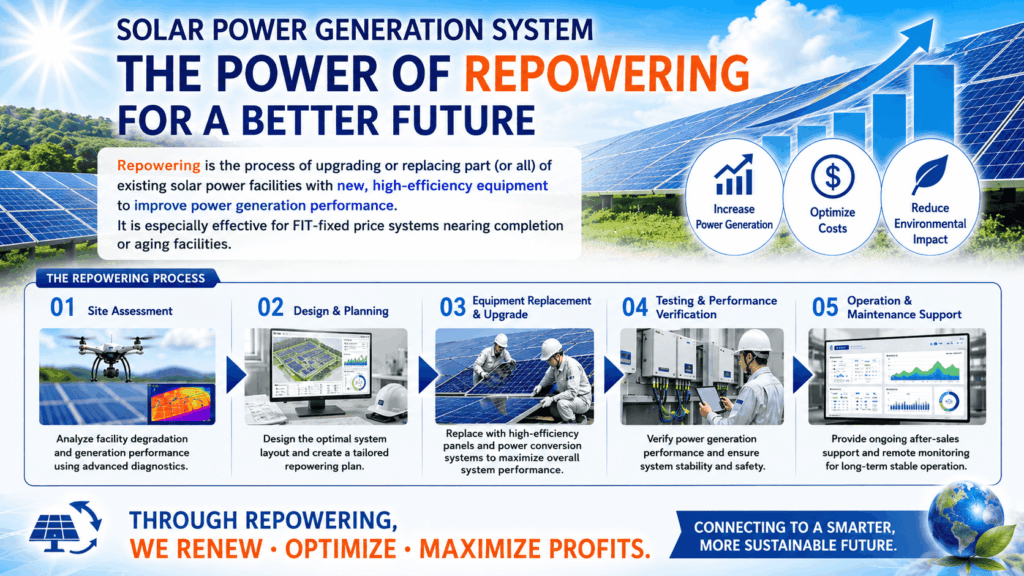
Solar Power Repowering
Solar Power System Repowering refers to the process of upgrading the performance of an existing solar power system by replacing or modernizing part or all of its equipment with new, high-efficiency components.
Repowering is particularly effective for systems that have reached the end of their Feed-in Tariff (FIT) period or have experienced performance degradation due to long-term operation and equipment aging. By upgrading key components, power generation efficiency, system reliability, and long-term operational performance can be significantly improved.
This initiative is being carried out in collaboration with Mr. Kijiro Mineta of MK Consulting LLC, a pioneer in the solar power industry and an expert in the design, construction, and optimization of solar power systems.
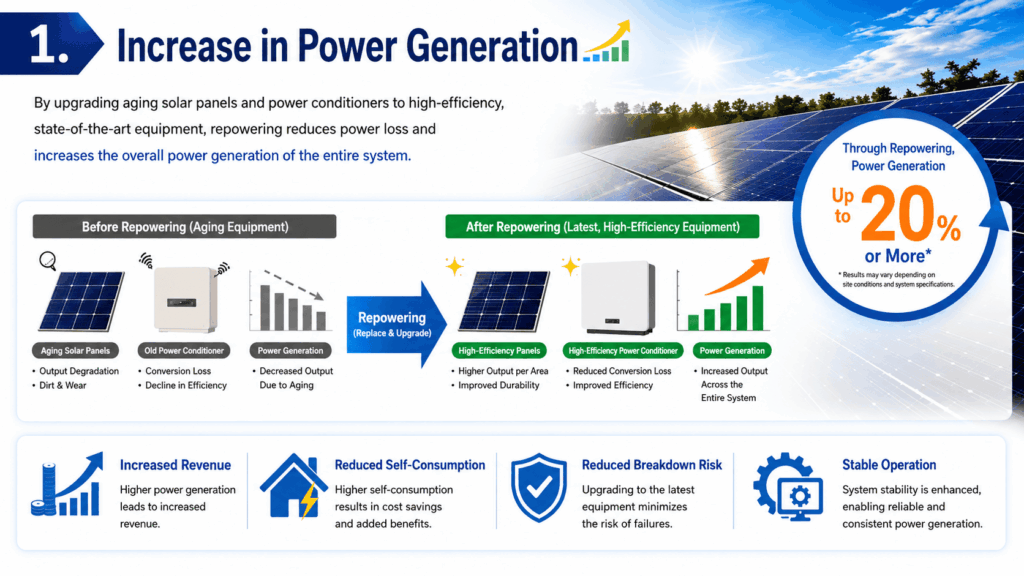
Increased Power Generation
By replacing aging solar panels and power conditioning systems (PCS) with the latest high-efficiency equipment, repowering minimizes power generation losses and significantly improves the overall performance of the solar power system.
In facilities that have been in operation for many years, the output of solar panels and the conversion efficiency of power conditioning systems may decline over time, resulting in lower electricity generation than originally expected.
Repowering optimizes system performance, leading to higher electricity sales revenue, greater self-consumption of generated power, and improved overall energy efficiency.
In addition, upgrading aging equipment helps reduce the risk of unexpected failures and contributes to more stable, reliable, and long-term system operation.
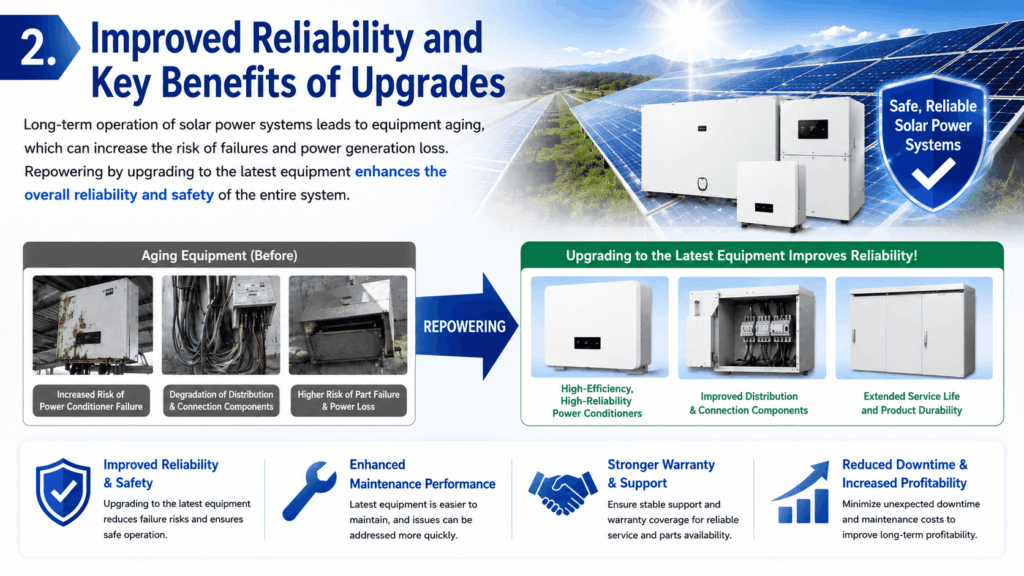
Improved Reliability and Upgrade Benefits
Over years of operation, solar power systems are subject to the aging of key components such as power conditioning systems (PCS), electrical connections, and wiring materials. This gradual deterioration increases the risk of equipment failure, unexpected downtime, and reduced power generation.
By replacing aging equipment with the latest high-performance technologies through repowering, the overall reliability, safety, and operational stability of the system can be significantly improved.
In addition, upgraded equipment is typically covered by manufacturer warranties, and replacement parts are more readily available, helping to reduce unexpected repair costs and minimize system downtime.
Maintaining a stable and reliable power generation environment not only improves operational efficiency but also enhances the long-term sustainability and profitability of solar power projects.
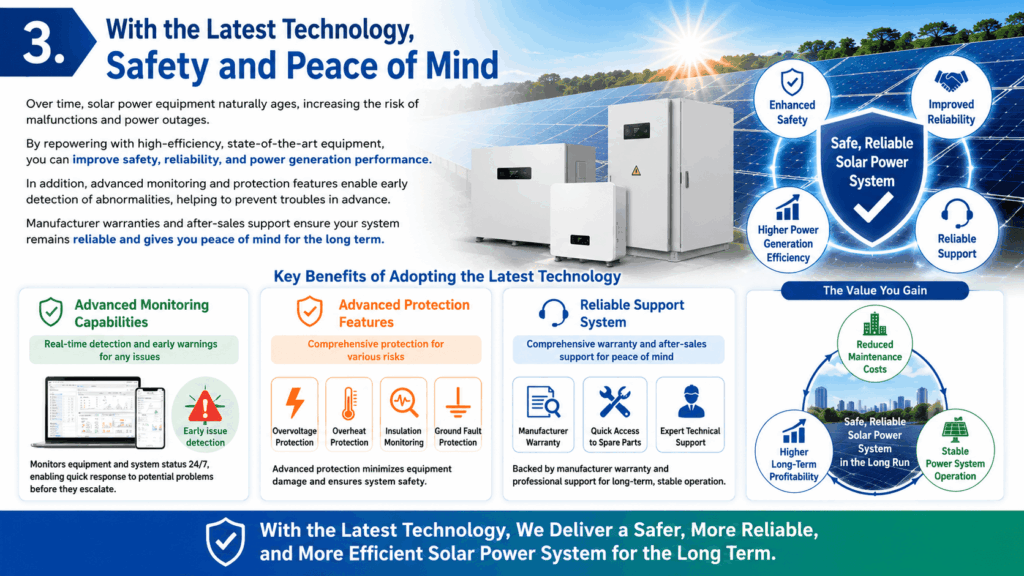
Enhanced Safety and Reliability with the Latest Technology
As solar power systems age, the performance of key components gradually declines, increasing the risk of equipment failure and unexpected interruptions in power generation.
By upgrading to the latest high-performance technologies through repowering, system owners can significantly improve safety, reliability, and power generation efficiency.
Modern equipment is equipped with advanced monitoring, diagnostic, and protection functions that enable early detection of abnormalities, helping to prevent failures before they occur and reducing operational risks.
In addition, comprehensive manufacturer warranties and maintenance support provide long-term peace of mind, ensuring stable and reliable operation throughout the system’s lifecycle.
Enhancing equipment safety and maintaining stable power generation not only secures business continuity but also contributes to improved long-term profitability.
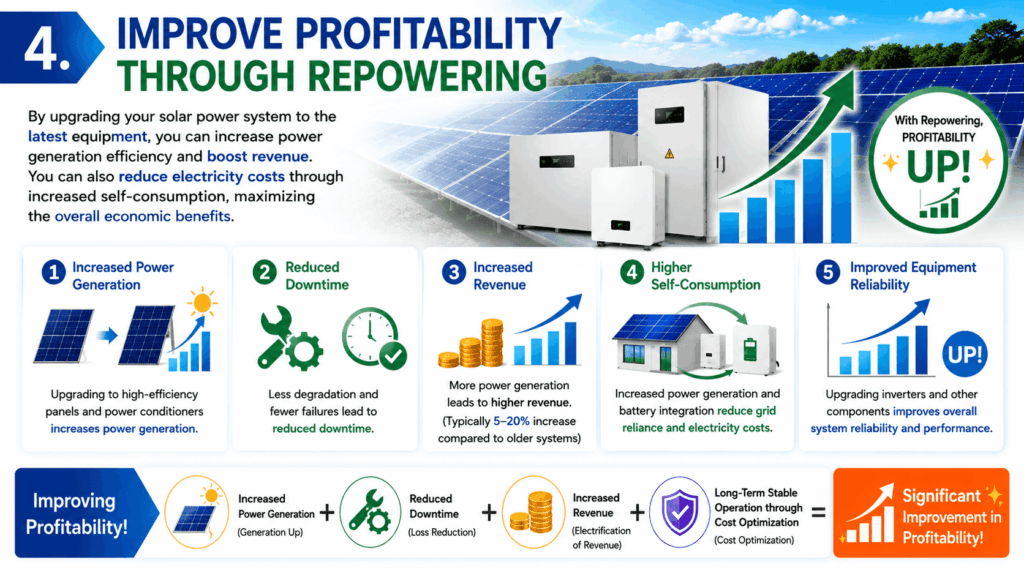
Improving Profitability Through Repowering
Upgrading a solar power system with the latest high-efficiency equipment improves overall power generation performance, leading to increased revenue from electricity sales and greater economic benefits through self-consumption.
① Increased Power Generation
Replacing aging solar panels and power conditioning systems (PCS) with high-efficiency models increases energy production, even under the same installation area and operating conditions.
② Reduced Downtime
New equipment reduces failures and performance degradation, minimizing losses caused by unexpected system shutdowns.
③ Higher Electricity Sales Revenue
Higher power generation results in increased electricity sales, improving annual revenue. In many cases, power generation can increase by approximately 5–20% per year compared with older systems.
④ Increased Self-Consumption Ratio
Combining higher power generation with battery energy storage systems (BESS) allows more electricity to be consumed on-site, reducing electricity purchase costs and improving energy efficiency.
⑤ Improved System Availability
Replacing key components such as the PCS increases system uptime and operational efficiency, resulting in higher annual energy production and improved long-term profitability.
Recommended Products for Solar Repowering
During solar repowering, we recommend applying “Yogore Stone”, a UV-resistant solar panel coating.
Unlike conventional coatings, Yogore Stone is made from a completely inorganic hydrophilic coating material, making it highly resistant to ultraviolet (UV) degradation. It helps maintain panel cleanliness through its self-cleaning properties, reducing the adhesion of dirt and making contaminants easier to wash away with rain.
By keeping solar panels cleaner for longer, the coating supports stable power generation, reduces maintenance frequency, and helps maximize the performance of newly upgraded solar power systems.

超親水性完全無機質材「汚れストーン」
